master jeweler
Showing posts with label master jeweler. Show all posts
Pearl Blay
master jeweler
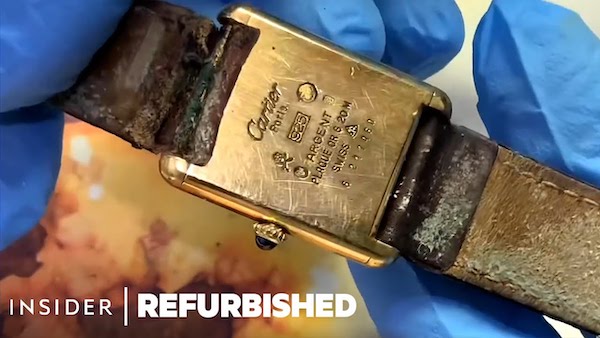
Watch How an Iconic Cartier Dress Watch is Restored

British watch specialist, Joe of Nekked Watchmaker is a watchmaker who services and restores old watches. Watch this Insider video which shows him restoring an iconic and highly desirable (especially the pre-owned ones) dress watch - a Tank Must de Cartier from the 1980's. This particular collection were then available with red, green and blue faces.
Louis Cartier created the first Tank watch in 1917, inspired by the tanks of World War I - they are still made to this day.
Pearl Blay
feature designer
historical
master jeweler
royalty
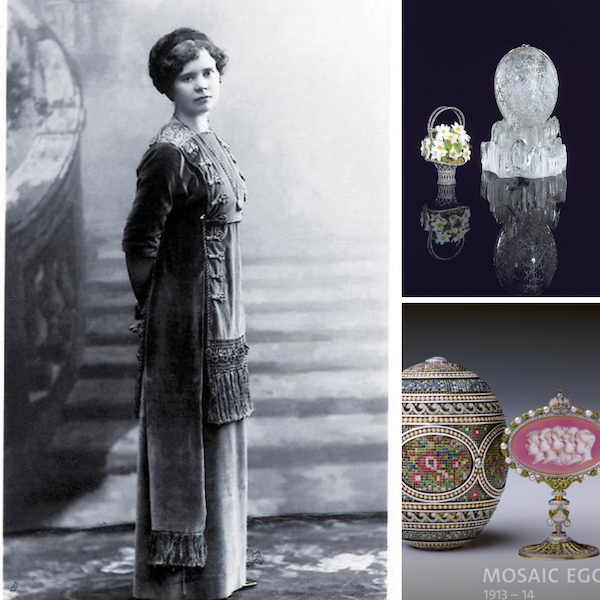
The Woman Who Designed Two Fabergé Imperial Easter Eggs
The famous Peter Carl Fabergé workshop in St Petersburg, designed and produced a total of 50 unique handmade bejeweled Easter Eggs for the Russian Royal Family from 1885 - 1917. Fabergé was an astute businessman who employed some of the best craftsmen in the industry. He and his staff were given complete design freedom and carte blanche to create the eggs. Each egg typically took a year to make.
Alma Pihl was a rarity - one of only two female designers in the company. Her Finnish grandfather, August Holmström, was Faberge's lead jeweler. She was the niece of the other female designer, Hilma Alina Holmström. Her uncle and brother were also master jewelers.
Pearl Blay
ethnic
gemstone
historical
master jeweler
royalty

I was born and raised in Malaysia as part of a unique South East Asian fusion culture - a descendant of predominantly 15th -16th century Chinese male immigrants who married local Malay women in South East Asia. There was significant trade between the imperial Chinese empire and the region for many centuries, long before the Europeans arrived, as the area is where the famed spice islands are located. According to historians, some of the early settlers might have came from Kublai Khan's large combined Chinese and Mongol invasion fleet in the 13th century.
The Art and History of 100 years of Peranakan Jewelry
Jewelry rarely survives through the ages. They were often disassembled and remade into more fashionable pieces. So archaeological finds such as those found at Sutton Hoo or buried hoards like the medieval jewelry from the time of the Black Death are important because they give us an idea of what jewelry looked like in a particular place and time. Another reason why jewelry disappears is during wartime.
The Peranakan, as they became to be known as, settled mostly in some parts of Indonesia, Penang and Malacca in Malaysia (once British Malaya) and in Singapore.
Pearl Blay
feature designer
master jeweler

Watch Top Jewelers Created an Exquisite Bejewelled Fairy Automaton

Van Cleef & Arpels is the famed luxury jewelry company whose clientele have included people like the Duchess of Windsor, Grace Kelly and Elizabeth Taylor. Their craftspeople are always up for a challenge such as the incredible bejewelled zipper necklace which actually works like one.
Another challenge they completed a few years ago is an exquisite bejewelled fairy automaton. It was a years long collaboration with the automaton maker, François Junod.
Pearl Blay
master jeweler

Today we take the humble zipper for granted. The fastener was invented in the 19th century and was initially used for rubber boots and tobacco pouches. But by the 1920's and 1930's, the zipper started to appear in clothing even in haute couture houses.
Legend has it that the Duchess of Windsor saw the zipper on a dress created by her favorite couturiers, Elsa Schiaparelli. The designer was one of the first to use the fastener not just as a functional fastener but as a style element.
Watch How a Van Cleef and Arpels Zip Necklace Transforms into a Bracelet!

Today we take the humble zipper for granted. The fastener was invented in the 19th century and was initially used for rubber boots and tobacco pouches. But by the 1920's and 1930's, the zipper started to appear in clothing even in haute couture houses.
Legend has it that the Duchess of Windsor saw the zipper on a dress created by her favorite couturiers, Elsa Schiaparelli. The designer was one of the first to use the fastener not just as a functional fastener but as a style element.
Pearl Blay
master jeweler
royalty
The Designer of the Duchess of Cambridge's Favorite Pearl Earrings
Even if you are not a Royal watcher, you can't but help notice the Duchess of Cambridge's choice of simple yet elegant jewelry. This is someone who has access to fabulous jewelry pieces from the Royal Collection. But understated is her style preference. One of her favorite earrings is these lovely pair by British designer, Annoushka Ducas. She wears them a lot.


Pearl Blay
historical
master jeweler
museum
royalty
At the Fabulous Faberge Exhibition in Montreal's Musuem of Fine Arts
It was good timing and not planning that we were recently in Montreal, Quebec, Canada, just at the start of a fabulous Faberge exhibition (June 14 - October 5, 2014) at the Museum of Fine Arts. We didn't know it was on until we checked out the museum website! It is an exclusive exhibition in Canada of the largest public collection of Faberge art outside of Russia.

Pearl Blay
bracelet
feature designer
gemstone
master jeweler
necklace
rings
Annette Gabbedey Creates Exquisite Jewelry Despite Having No Fingers
Highly talented UK based goldsmith, Annette Gabbedey, makes exquisite contemporary bespoke (custom) jewelry. She is inspiring in more ways than one. She is a shining example of someone who pursued her passion regardless of whatever disadvantages others might have thought she had. Annette was born without fingers.

Pearl Blay
luxury
master jeweler
movie
Tiffany Jewelry for The Great Gatsby
Jewelry lovers are in for a visual treat if they were to go and see the latest movie version of F. Scott Fitzgerald's, The Great Gatsby. The tale of decadence, betrayal and murder is set in the 1920's. From a jewelry design perspective, the movie beautifully evokes jazz age glamor with the stunning art deco pieces.
 |
| Carey Mulligan as Daisy Buchanan |
Pearl Blay
master jeweler
news stories
Van Cleef & Arpels Opens a Jewelry School
Earlier this year, an unusual jewelry school opened in Paris. It's not the usual kind of workshop you could go to for these are classes presented by one of the world's top jewelry houses.

Van Cleef and Arpels was founded over a century ago. It has a storied clientele which includes the rich and famous such as the Rothchilds, the Duke and Duchess of Windsor, Prince Rainier and Princess Grace of Monaco, Marlene Dietrich, Brigitte Bardot and Catherine Deneuve.

Van Cleef and Arpels was founded over a century ago. It has a storied clientele which includes the rich and famous such as the Rothchilds, the Duke and Duchess of Windsor, Prince Rainier and Princess Grace of Monaco, Marlene Dietrich, Brigitte Bardot and Catherine Deneuve.
Pearl Blay
auction
biography
master jeweler
Suzanne Belperron's Jewelry
The vast majority of jewelry collections sold at auction are usually those belonging to royalty and extremely wealthy people. The upcoming Sotheby's auction of Suzanne Belperron's (1900- 1983) personal jewelry is an unusual exception for she was a noted French jewelry designer and one of the most influential ones of the 20th century.
 |
| Picture Source |
Pearl Blay
feature designer
master jeweler
rings
unusual jewelry
Can't afford a huge diamond? That's not a problem if you check out the limited edition diamond mirror rings by Swiss designer Nicolas Le Moigne and the historic Viennese jeweler AE Kochert (they were once the imperial jeweler to the Habsburg-Lothringen dynasty).
The designer exaggerates the size and even the number of diamonds by cleverly integrating mirrors into the ring designs so you get more for your money!
Enhanced Diamond Mirror Rings
 |
| Multiplying the single diamond |
Jewelry Reflections
Part 1 of 3Can't afford a huge diamond? That's not a problem if you check out the limited edition diamond mirror rings by Swiss designer Nicolas Le Moigne and the historic Viennese jeweler AE Kochert (they were once the imperial jeweler to the Habsburg-Lothringen dynasty).
The designer exaggerates the size and even the number of diamonds by cleverly integrating mirrors into the ring designs so you get more for your money!
Pearl Blay
feature designer
gemstone
master jeweler
 Papillon Inspirations
Part 1 of 2
People who consider themselves bug haters will more than likely make allowances for butterflies.
These delicate beautiful creatures are not surprisingly a popular motif for jewelry makers.
Butterfly Jewelry by Van Cleef & Arpels

Part 1 of 2
People who consider themselves bug haters will more than likely make allowances for butterflies.
These delicate beautiful creatures are not surprisingly a popular motif for jewelry makers.
Pearl Blay
auction
gemstone
jewelry
master jeweler
royalty
The jewels of Wallis, the Duchess of Windsor were first offered for sale back in 1987. All 306 pieces sold for $50 million which went to the Pasteur Institute. The proceeds from the spectacular sale remain a world record for an auction of a single owner jewelry collection. No wonder, as the collection celebrates the famous story of the king who gave up his throne for the woman he loved.
In November, 20 pieces will be available for auction again and no doubt will fetch millions. It's a fraction of the original auction but it does contain some memorable pieces which were commissioned to mark important events in the Duke and Duchess of Windsor's lives.
The Duchess of Windsor's Jewels to be Auctioned Again
 |
| Duchess of Windsor via Wikipedia |
In November, 20 pieces will be available for auction again and no doubt will fetch millions. It's a fraction of the original auction but it does contain some memorable pieces which were commissioned to mark important events in the Duke and Duchess of Windsor's lives.
Pearl Blay
master jeweler
movie
rings
H.Stern's Amazing Alice in Wonderland Rings
Just as there are wonderful examples of handmade jewelry artisans coming up with designs based on a common theme, top flight jewelers also rise to the challenge. I've written about Tom Binns' designs for Disney's Alice in Wonderland. Swarovski also came up with their distinctly different designs. Now we have H.Stern's outstanding Alice in Wonderland rings. H.Stern Jewelers is a Brazilian company with international stores.


Pearl Blay
bracelet
brooch
feature designer
master jeweler
rings
 When we think of Fabergé, we think of the fabled gemstone and precious metal eggs the legendary Russian master jeweler made for the doomed Imperial family, the Romanovs. But the House of Fabergé was renowned firstly for fine craftsmanship and intricate jewelry designs.
Peter Carl Fabergé (1846- 1920) was of French descent but was born in St. Petersburg. He took over his father's modest jewelry store and together with his brother Agathon, they grew the business grew and attracted the attention and patronage of the Russian aristocracy and the Imperial family.
The New Faberge Jewelry Collection
 When we think of Fabergé, we think of the fabled gemstone and precious metal eggs the legendary Russian master jeweler made for the doomed Imperial family, the Romanovs. But the House of Fabergé was renowned firstly for fine craftsmanship and intricate jewelry designs.
Peter Carl Fabergé (1846- 1920) was of French descent but was born in St. Petersburg. He took over his father's modest jewelry store and together with his brother Agathon, they grew the business grew and attracted the attention and patronage of the Russian aristocracy and the Imperial family.
Pearl Blay
gemstone
master jeweler
necklace
unusual jewelry
 Mathematical Jewelry
Part 2 of 2
I never cease to be amazed by the sources of inspiration jewelry designers come up with. Marc Newson created this drop dead gorgeous one of a kind diamond and sapphire design for Boucheron, the luxury jeweler. This is pave jewelry at its finest - 2,000 stones which took the craftspeople 1,500 hours to complete.
He is obsessed with fractals - these are geometric shapes which incorporate smaller and identical copies of the main shape in the pattern. He was specifically inspired by the Julia set, a fractal whose formula was created by the French mathematician Gaston Julia (1893-1978).
I can't even begin to understand the math behind fractals but they are really lovely to behold when rendered in a way we can all appreciate. Indeed it is easy to see why fractals have inspired other artists too. You can see more fractal pictures here and here and perhaps be inspired yourself.
Below is a Julia set fractal which probably inspired Newson.

Via
______________________________
Original Post by THE BEADING GEM
Jewelry Making Tips - Jewelry Business Tips
Math Inspired Jewelry - Marc Newson's Fractal Necklace
 Mathematical Jewelry
 Part 2 of 2
I never cease to be amazed by the sources of inspiration jewelry designers come up with. Marc Newson created this drop dead gorgeous one of a kind diamond and sapphire design for Boucheron, the luxury jeweler. This is pave jewelry at its finest - 2,000 stones which took the craftspeople 1,500 hours to complete.
He is obsessed with fractals - these are geometric shapes which incorporate smaller and identical copies of the main shape in the pattern. He was specifically inspired by the Julia set, a fractal whose formula was created by the French mathematician Gaston Julia (1893-1978).
I can't even begin to understand the math behind fractals but they are really lovely to behold when rendered in a way we can all appreciate. Indeed it is easy to see why fractals have inspired other artists too. You can see more fractal pictures here and here and perhaps be inspired yourself.
Below is a Julia set fractal which probably inspired Newson.

Via
______________________________
Original Post by THE BEADING GEM
Jewelry Making Tips - Jewelry Business Tips
Pearl Blay
master jeweler
news stories
photo shoot
supplies and displays


Jewelry for men, maybe?
Part 2 of 2
I've often been wowed by how professional jewelry photographers make their shoots different. In the past, I've featured an edgy street scene photo shoot , jewelry on lingerie and even real human skeletons as jewelry displays. But what about using men as models for women's jewelry? Now that is a wickedly clever combination to attract women's attention - beefcake and sparkly jewelry. The first photo on the left shows male model Richard Lima with a sparkling piece across his broad chest. The second shows Marc Jacobs wearing an Andrew Grima necklace. Rippling muscles and pretty jewelry - quite the contrast! Hyperventilating yet?
These photos are amongst the many in a special book project put together by the renowned American fashion photographer Bruce Weber to celebrate the French luxury jeweler Cartier's 100th anniversary. He was given full access to Cartier's corporate archives and photos. The book is called Cartier I Love You and was recently published.

Via and Via
For more tutorials check out my Jewelry Making Tips
Liked what you read? Don't miss a post! Subscribe via RSS OR Via Email* It's FREE! *Click on the link in the confirmation email to activate subscription

Be a Fan!


Jewelry for Women on Men - Cartier's 100th Anniversary Jewelry Shoot


Jewelry for men, maybe?
Part 2 of 2
I've often been wowed by how professional jewelry photographers make their shoots different. In the past, I've featured an edgy street scene photo shoot , jewelry on lingerie and even real human skeletons as jewelry displays. But what about using men as models for women's jewelry? Now that is a wickedly clever combination to attract women's attention - beefcake and sparkly jewelry. The first photo on the left shows male model Richard Lima with a sparkling piece across his broad chest. The second shows Marc Jacobs wearing an Andrew Grima necklace. Rippling muscles and pretty jewelry - quite the contrast! Hyperventilating yet?
These photos are amongst the many in a special book project put together by the renowned American fashion photographer Bruce Weber to celebrate the French luxury jeweler Cartier's 100th anniversary. He was given full access to Cartier's corporate archives and photos. The book is called Cartier I Love You
and was recently published.
Via and Via
For more tutorials check out my Jewelry Making Tips
Liked what you read? Don't miss a post! Subscribe
via RSS OR Via Email* It's FREE! *Click on the link in the confirmation email to activate subscriptionBe a Fan!
Pearl Blay
biography
hair jewelry
historical
master jeweler
 The Gilded Age was the post-Civil War period when a new generation of powerful industrial magnates emerged in America. These captains of industry became phenomenally wealthy. They could buy all the gold and the glitter for their families but not social status. In the 19th century, the nouveau riche were not accepted in the old Knickerbocker New York society and soon turned further east to realise their social ambitions.
From 1870 until the first World War, throngs of incredibly rich, beautiful and smartly dressed American girls dubbed the "Dollar Princesses" crossed the Atlantic in search of titled husbands. 454 landed their quarry but only 100 managed to marry into the British peerage. The rest settled for Continental European aristocrats. The biggest catches were the British peers of the realm (in descending order of rank) either a Duke, Marquis, Earl, Viscount, or Baron.
You'd think from all the romance novels there was an abundance of Dukes. But there are actually only 27 Dukedoms and at any one time, just 2-3 heirs are "available". Six American girls did marry Dukes- five were heiresses (the sixth was a showgirl). In turn, the peers not only gained wives to begat their heirs but more importantly to refill their empty coffers. Keeping up appearances and owning a castle or two was expensive business.
As newcomers in a strange new land, their lives intertwined and many became friends. Here are some of the stories of the leading petticoat and corset wave of American women who cut a swarth through stodgy 19th century English society.
In for a lark
 One of the first women to pave the way for the others was the beautiful, intelligent and witty Jennie Jerome (1854-1921) the daughter of US financier, Leonard Jerome. She met the slight but charismatic Lord Randolph Churchill at a ball. Theirs was a whirlwind romance - he proposed and was accepted 3 days later.
The engagment horrified both sets of parents. Hers, because neither Randolph nor her asked them as was the custom. And his, because the bride to be was American not English. Fortunately, the Prince of Wales, the future King Edward VII smoothed things over for Jennie and all the heiresses to come. He had a thing for pretty women and Americans "because they are original and bring fresh air into Society". Jennie became Lady Randolph Churchill, no more, for Randolph, a younger son, was not the heir. Jennie was a tremendous help to the political careers of her husband and one of her sons - Britain's greatest Prime Ministers, Winston Churchill.
 Her friend, the unconventional and high spirited Consuelo Yznaga del Valle (1858-1909) of Cuban and Spanish aristocratic descent, married George "Kim" Montagu, the future 8th Duke of Manchester during his travels in Louisiana. His parents initially objected but then reality set in. Better Consuelo than no bride at all. Their son, a rake and degenerate, was so far gone, no English girl would have him.
Consuelo and Kim's wedding was a New York media sensation and the start of Anglomania. Amongst her wedding gifts was a stunning diamond and ruby bracelet which she willed to King Edward's Queen Alexandra on her death. It is now in the Royal Collection.
Consuelo once said to a friend, "England is all right for splendor but dead slow for fun." With her natural wit and liveliness, she took Society by storm and was soon became a popular hostess at the highest social circles. Entertaining the perpetually bored Prince of Wales was a full-time job. For all her social success though, Consuelo paid dearly for her impulsive marriage and the right to be called the Duchess of Manchester. Her husband was a drunk, womanizer and spendthrift. Her unhappy marriage was full of money woes and compounded by the loss of her two beautiful twin daughters to illness and disappointment in her son who turned out even worse than his father.
Fortune-hunting Dukes
 Consuelo's son, William, also known as Kim, the 9th Duke of Manchester, followed his father's footsteps and married another heiress, Helena Zimmerman (1879-1971). Her father, millionaire Eugene Zimmerman initially objected, " I want my daughter to marry some thoroughbred American. I want no Duke for a son-in-law." But Helena was young and starry-eyed for fame and got her way. What she didn't bargain for was her lying, debt ridden, publicity hungry husband who not only spent her money but constantly embarrassed her in the newspapers with his ridiculous get rich schemes. He was so bad when her father and his mother died, their wills made sure Kim didn't get a single penny.
The magnificient Manchester diamond tiara shown above (picture by Swamibu ) was designed by Cartier and was worn by both Consuelo Yznaga and Helena Zimmerman. Helena wore it at the Coronation of Edward VII in 1902 who succeeded his mother, Queen Victoria. Helena is shown here wearing her full coronation robes. She looks pretty grim probably because of the heavy tiara. Queen Alexandra, Edward's consort, could wear heavy diadems with effortless style but she was exceptional. One Lady Barnstaple was quoted, "I've seen women turn actually grey under the weight of their tiaras."
At a coronation, peeresses wear a special coronet which is a small crown. The design for each rank is different. Helena's picture doesn't show it but she probably wore a coronet within the tiara for the ceremony. King Edward enjoyed the moment after the coronation of his Queen when all the peeresses simultaneously put on their coronets. He was reminded of a ballet scene with the graceful movement of feminine arms, rustling robes and glittery jewels.
 George Spencer Churchill, the 8th Duke of Malborough, known as Blandford, was the older brother of Lord Randolph Churchill. He took note of his brother's marriage to an American heiress and crossed the Atlantic to find himself one. Lily Hammersley (1854-1909), a wealthy widow, made sure he found her. He needed to marry money as the duchal coffers were empty.
The American press were not impressed, "Everything his Grace of Malborough brought with him was clean, except his reputation". Indeed, he was a perennially "wicked boy" as the Prince of Wales called him. He was unfaithful to his first wife and worse, his adulterous affairs became public. He was ostracised by the Royal Family and thus the rest of society.
Lily Hammersley was not just rich - her first husband left her millions - but she was kind, gentle and a woman bred to soothe a man's ego. She probably made the mistake of thinking she could change her husband AND get to be a Duchess. What she didn't know until too late, was how hollow that title was. Society's doors were shut to her due to her husband's unsavory reputation. Also by this time, English aristocratic mamas were getting really tired of seeing their daughters' marital prospects evaporate with each incoming American bride.
Even Lily's new home, Bleinheim Palace was no comfort. It was huge and not homely at all. She had to spend a lot of money to update the cold, drafty place. Blandford also hurt her deeply by continuing with his scandalous ways. He even brought a mistress home as a guest. Despite it all, Lily still mourned him when he died of a heart attack. Such was her generous and sweet personality, his family counted her as one of them for the rest of her life. She and Blandford had no children together but she was loving and maternal to her stepson, Charles Spencer-Churchill, the next Duke of Malborough known as Sunny and he was fond of her. Sunny too had to seek a rich wife.
Poor little rich girls
 Gertrude Vanderbilt understood too well what it was really like to be an heiress. She wrote poignantly in her diary, "There is no one in all the world who loves her for herself. No one." She ended up marrying the equally wealthy boy next door. Her cousin, Consuelo Vanderbilt (1877-1964) was not so lucky because she had an exceedingly pushy mama.
Consuelo Vanderbilt was named after Consuelo Yznaga who happened to be her mother, Alva Vanderbilt's best friend from childhood. Alva was a frightfully domineering and socially ambitious mother who had grand plans for her daughter's future. Consuelo wrote in her autobiography, how much she hated the back brace she was forced to wear in childhood. At any rate, she did grow up to be a 5' 9" willowy beauty with a pert nose and long swan-like neck - perfect for pearls (see my past post - The Vanderbilt heiress and her historic pearl choker).
Her mother forced her to marry the 5' 6" Sunny, the 9th Duke of Malborough even though Consuelo loved another man. Alva did everything in her power to make it happen. She even locked Consuelo up in her room at one point and pretended her daughter's refusal was making her ill. Consuelo caved and wept at the altar. The public though lapped up every detail of the wedding much like celebrity weddings today.
Sunny and Consuelo were an ill-matched couple. Sunny once told a friend he didn't like tall women but he was willing enough to marry one for her millions. He was conceited, arrogant, boorish and did not appreciate his wife's intelligence and her social work. The marriage eventually broke up after the requisite heir and spare were born.
Happy ever after?
They may have married nobles, worn scads of jewels but many did not find love with their marriages. Jennie Churchill and Consuelo Manchester didn't have happy marriages and took on lovers. The Prince of Wales was Consuelo's lover. He was positively lecherous. He enjoyed looking over each season's debutantes but kept his hands off them. Married women though were fair game. Jennie went on to marry much younger men after her husband died of syphilis.
Some did find happiness later on with their next husbands - Consuelo Vanderbilt with Jacques Balsan, a handsome Frenchman. She reconciled with her bossy mother Alva and in a wierd twist of fate, both women championed the rights of women later on. Helena's second husband, the 10th Earl of Kintore gave her a quiet, private life. Lily Hammersley married the decorated soldier, Lord William Beresford who not only gave her the social status she craved but finally a son as well when she was 43. Her happiness was short-lived for she became a widow for a third time after about 5 years of marriage.
 Only one American duchess, May Goelet, married her Prince Charming, the handsome six foot Scot, Henry John Innes-Ker, the 8th Duke of Roxburghe known as Kelso by his family. He was exactly the kind of duke written about in romance novels - a fine man, true to the word "noble". He didn't gamble away the family fortune. Indeed, he was rich enough not to need to marry for money.
May was the wealthiest heiress of them all - her father was Ogden Goelet, the real estate magnate. With $20 million dollars to her name, she was constantly surrounded by suitors. What caught May's attention was Kelso's cool detachment - he refused to be part of the milling male crowd around her. Their courtship took time to develop in private and when they did marry, it was as a couple who were quite sure of each other.
May gloried in her new home, the magnificient Floors Castle in Scotland and made it her task to transform the castle to its former glory with fine art and furnishings. Kelso was delighted with the result. She was much admired and her name is still spoken with respect there. She also got to wear the fabulous Roxburghe emeralds. The one thing that marred their early happiness was the lack of children but after 10 years of marriage, Kelso's son and heir was born. He grew up to be like his father but unlike him, he chose a British bride.
References
1. Gail MacColl & Carol Wallace (1989) To Marry an English Lord or, How Anglomania Really Got Started Workman Publishing, New York.
2. Marian Fowler (1993).In a Gilded Cage: From Heiress to Duchess Random House, Canada
Dollars and Dukes
___________________
The Beading Gem's Journal
Subscribe via RSS Via Email
Jewels for the Dollar Princesses
 The Gilded Age was the post-Civil War period when a new generation of powerful industrial magnates emerged in America. These captains of industry became phenomenally wealthy. They could buy all the gold and the glitter for their families but not social status. In the 19th century, the nouveau riche were not accepted in the old Knickerbocker New York society and soon turned further east to realise their social ambitions.
From 1870 until the first World War, throngs of incredibly rich, beautiful and smartly dressed American girls dubbed the "Dollar Princesses" crossed the Atlantic in search of titled husbands. 454 landed their quarry but only 100 managed to marry into the British peerage. The rest settled for Continental European aristocrats. The biggest catches were the British peers of the realm (in descending order of rank) either a Duke, Marquis, Earl, Viscount, or Baron.
You'd think from all the romance novels there was an abundance of Dukes. But there are actually only 27 Dukedoms and at any one time, just 2-3 heirs are "available". Six American girls did marry Dukes- five were heiresses (the sixth was a showgirl). In turn, the peers not only gained wives to begat their heirs but more importantly to refill their empty coffers. Keeping up appearances and owning a castle or two was expensive business.
As newcomers in a strange new land, their lives intertwined and many became friends. Here are some of the stories of the leading petticoat and corset wave of American women who cut a swarth through stodgy 19th century English society.
In for a lark
 One of the first women to pave the way for the others was the beautiful, intelligent and witty Jennie Jerome (1854-1921) the daughter of US financier, Leonard Jerome. She met the slight but charismatic Lord Randolph Churchill at a ball. Theirs was a whirlwind romance - he proposed and was accepted 3 days later.
The engagment horrified both sets of parents. Hers, because neither Randolph nor her asked them as was the custom. And his, because the bride to be was American not English. Fortunately, the Prince of Wales, the future King Edward VII smoothed things over for Jennie and all the heiresses to come. He had a thing for pretty women and Americans "because they are original and bring fresh air into Society". Jennie became Lady Randolph Churchill, no more, for Randolph, a younger son, was not the heir. Jennie was a tremendous help to the political careers of her husband and one of her sons - Britain's greatest Prime Ministers, Winston Churchill.
 Her friend, the unconventional and high spirited Consuelo Yznaga del Valle (1858-1909) of Cuban and Spanish aristocratic descent, married George "Kim" Montagu, the future 8th Duke of Manchester during his travels in Louisiana. His parents initially objected but then reality set in. Better Consuelo than no bride at all. Their son, a rake and degenerate, was so far gone, no English girl would have him.
Consuelo and Kim's wedding was a New York media sensation and the start of Anglomania. Amongst her wedding gifts was a stunning diamond and ruby bracelet which she willed to King Edward's Queen Alexandra on her death. It is now in the Royal Collection.
Consuelo once said to a friend, "England is all right for splendor but dead slow for fun." With her natural wit and liveliness, she took Society by storm and was soon became a popular hostess at the highest social circles. Entertaining the perpetually bored Prince of Wales was a full-time job. For all her social success though, Consuelo paid dearly for her impulsive marriage and the right to be called the Duchess of Manchester. Her husband was a drunk, womanizer and spendthrift. Her unhappy marriage was full of money woes and compounded by the loss of her two beautiful twin daughters to illness and disappointment in her son who turned out even worse than his father.
Fortune-hunting Dukes
 Consuelo's son, William, also known as Kim, the 9th Duke of Manchester, followed his father's footsteps and married another heiress, Helena Zimmerman (1879-1971). Her father, millionaire Eugene Zimmerman initially objected, " I want my daughter to marry some thoroughbred American. I want no Duke for a son-in-law." But Helena was young and starry-eyed for fame and got her way. What she didn't bargain for was her lying, debt ridden, publicity hungry husband who not only spent her money but constantly embarrassed her in the newspapers with his ridiculous get rich schemes. He was so bad when her father and his mother died, their wills made sure Kim didn't get a single penny.
The magnificient Manchester diamond tiara shown above (picture by Swamibu ) was designed by Cartier and was worn by both Consuelo Yznaga and Helena Zimmerman. Helena wore it at the Coronation of Edward VII in 1902 who succeeded his mother, Queen Victoria. Helena is shown here wearing her full coronation robes. She looks pretty grim probably because of the heavy tiara. Queen Alexandra, Edward's consort, could wear heavy diadems with effortless style but she was exceptional. One Lady Barnstaple was quoted, "I've seen women turn actually grey under the weight of their tiaras."
At a coronation, peeresses wear a special coronet which is a small crown. The design for each rank is different. Helena's picture doesn't show it but she probably wore a coronet within the tiara for the ceremony. King Edward enjoyed the moment after the coronation of his Queen when all the peeresses simultaneously put on their coronets. He was reminded of a ballet scene with the graceful movement of feminine arms, rustling robes and glittery jewels.
 George Spencer Churchill, the 8th Duke of Malborough, known as Blandford, was the older brother of Lord Randolph Churchill. He took note of his brother's marriage to an American heiress and crossed the Atlantic to find himself one. Lily Hammersley (1854-1909), a wealthy widow, made sure he found her. He needed to marry money as the duchal coffers were empty.
The American press were not impressed, "Everything his Grace of Malborough brought with him was clean, except his reputation". Indeed, he was a perennially "wicked boy" as the Prince of Wales called him. He was unfaithful to his first wife and worse, his adulterous affairs became public. He was ostracised by the Royal Family and thus the rest of society.
Lily Hammersley was not just rich - her first husband left her millions - but she was kind, gentle and a woman bred to soothe a man's ego. She probably made the mistake of thinking she could change her husband AND get to be a Duchess. What she didn't know until too late, was how hollow that title was. Society's doors were shut to her due to her husband's unsavory reputation. Also by this time, English aristocratic mamas were getting really tired of seeing their daughters' marital prospects evaporate with each incoming American bride.
Even Lily's new home, Bleinheim Palace was no comfort. It was huge and not homely at all. She had to spend a lot of money to update the cold, drafty place. Blandford also hurt her deeply by continuing with his scandalous ways. He even brought a mistress home as a guest. Despite it all, Lily still mourned him when he died of a heart attack. Such was her generous and sweet personality, his family counted her as one of them for the rest of her life. She and Blandford had no children together but she was loving and maternal to her stepson, Charles Spencer-Churchill, the next Duke of Malborough known as Sunny and he was fond of her. Sunny too had to seek a rich wife.
Poor little rich girls
 Gertrude Vanderbilt understood too well what it was really like to be an heiress. She wrote poignantly in her diary, "There is no one in all the world who loves her for herself. No one." She ended up marrying the equally wealthy boy next door. Her cousin, Consuelo Vanderbilt (1877-1964) was not so lucky because she had an exceedingly pushy mama.
Consuelo Vanderbilt was named after Consuelo Yznaga who happened to be her mother, Alva Vanderbilt's best friend from childhood. Alva was a frightfully domineering and socially ambitious mother who had grand plans for her daughter's future. Consuelo wrote in her autobiography, how much she hated the back brace she was forced to wear in childhood. At any rate, she did grow up to be a 5' 9" willowy beauty with a pert nose and long swan-like neck - perfect for pearls (see my past post - The Vanderbilt heiress and her historic pearl choker).
Her mother forced her to marry the 5' 6" Sunny, the 9th Duke of Malborough even though Consuelo loved another man. Alva did everything in her power to make it happen. She even locked Consuelo up in her room at one point and pretended her daughter's refusal was making her ill. Consuelo caved and wept at the altar. The public though lapped up every detail of the wedding much like celebrity weddings today.
Sunny and Consuelo were an ill-matched couple. Sunny once told a friend he didn't like tall women but he was willing enough to marry one for her millions. He was conceited, arrogant, boorish and did not appreciate his wife's intelligence and her social work. The marriage eventually broke up after the requisite heir and spare were born.
Happy ever after?
They may have married nobles, worn scads of jewels but many did not find love with their marriages. Jennie Churchill and Consuelo Manchester didn't have happy marriages and took on lovers. The Prince of Wales was Consuelo's lover. He was positively lecherous. He enjoyed looking over each season's debutantes but kept his hands off them. Married women though were fair game. Jennie went on to marry much younger men after her husband died of syphilis.
Some did find happiness later on with their next husbands - Consuelo Vanderbilt with Jacques Balsan, a handsome Frenchman. She reconciled with her bossy mother Alva and in a wierd twist of fate, both women championed the rights of women later on. Helena's second husband, the 10th Earl of Kintore gave her a quiet, private life. Lily Hammersley married the decorated soldier, Lord William Beresford who not only gave her the social status she craved but finally a son as well when she was 43. Her happiness was short-lived for she became a widow for a third time after about 5 years of marriage.
 Only one American duchess, May Goelet, married her Prince Charming, the handsome six foot Scot, Henry John Innes-Ker, the 8th Duke of Roxburghe known as Kelso by his family. He was exactly the kind of duke written about in romance novels - a fine man, true to the word "noble". He didn't gamble away the family fortune. Indeed, he was rich enough not to need to marry for money.
May was the wealthiest heiress of them all - her father was Ogden Goelet, the real estate magnate. With $20 million dollars to her name, she was constantly surrounded by suitors. What caught May's attention was Kelso's cool detachment - he refused to be part of the milling male crowd around her. Their courtship took time to develop in private and when they did marry, it was as a couple who were quite sure of each other.
May gloried in her new home, the magnificient Floors Castle in Scotland and made it her task to transform the castle to its former glory with fine art and furnishings. Kelso was delighted with the result. She was much admired and her name is still spoken with respect there. She also got to wear the fabulous Roxburghe emeralds. The one thing that marred their early happiness was the lack of children but after 10 years of marriage, Kelso's son and heir was born. He grew up to be like his father but unlike him, he chose a British bride.
References
1. Gail MacColl & Carol Wallace (1989) To Marry an English Lord or, How Anglomania Really Got Started
Workman Publishing, New York.2. Marian Fowler (1993).In a Gilded Cage: From Heiress to Duchess
Random House, CanadaDollars and Dukes
___________________
The Beading Gem's Journal
Subscribe
via RSS Via Email
Pearl Blay
biography
famous gemstone
historical
master jeweler
royalty
 Catherine II (1729-1796) loved Russia with her heart and soul and yet, she had not one drop of Russian blood in her veins. Born a German princess, she was destined to be one of Russia's greatest rulers. Her administrative skills and political acumen made Russia a super power in her day. The economy of her adopted country boomed under her rule and she was a patron of the arts, literature and education.
The path from being merely a Queen Consort to absolute monarch was not easy. Along the way, she had to swallow her revulsion and marry the future Peter III when she was 14. He was small, immature and mentally unstable - a giggling idiot really - and horribly disfigured by smallpox. Worse she had to produce an heir, her only legitimate son, Paul. Once they finally got that unpleasant duty out of the way, Catherine and Peter went their separate ways and took other lovers.
 When Peter (pictured at left with Catherine about the time when they were married) became Tsar in 1762, Catherine's life was in peril because her husband hated her so much he would have had her killed. Fortunately for Catherine, Peter managed to alienate every one in Russia right away and ruled only six months. His worst mistake was to end the Seven Years' War with Prussia by giving the losing side everything Russian soldiers had won in bloody combat. He also insisted his soldiers wore new uniforms styled after their enemy's because he was Prussia's biggest fan. The Russian army rebelled led by the Orlov brothers, deposed Peter and put a 33 year old Catherine on the throne - not as regent for her son but as Empress in her own right. One of them also killed Peter in prison making sure her claim to the throne was without challenge. Nobody missed him.
 The Russian royal family was so rich they were practically dripping in gemstones. The pearls in this Cartier necklace were thought to have belonged to Catherine. The original Cartier necklace comprising of a 5 strands of 389 natural pearls came with an enamel clasp representing Catherine, Empress of Russia and two diamond alternate clasps. It was bought by Horace Elgin Dodge, the American automotive magnate in 1920 for his wife, Anna Thomson Dodge. He paid $825,000 - about $8 million in today's dollars! It now consists of 3 strands and was sold at auction last month for $600,000. This is a lot less than what Dodge paid for it which probably reflects its inconclusive provenance and the fact this gemstone is no longer rare due to the culturing of pearls. But someone who values natural pearls and the probable history of this necklace got a bargain.
What stood out in this Tsarina's life was her long string of lovers and her incredible libido which did not abate with age. Long after she grew obese and toothless she still had young lovers - men in their twenties who were handsome, charming and usually not very bright. Arm candy indeed for a powerful Empress but it wasn't easy for them. One of her young lovers died of diphtheria, unable to fight the infection because his constitution was supposedly weakened by heavy aphrodisiac use. Her last lover, a very handsome Platon Zubov was forty years her junior and earned every last ruble of his pay. Catherine was so corpulent by that time she needed two chairs to sit on.
But she was no nymphomaniac. She truly loved each and every one of her serial lovers, declaring "I cannot live one day without love." Catherine was phenomenally generous with all her departing lovers giving them titles even a crown in one case. Over 34 years, she spent 2 billion dollars in jewels, cash, palaces, works of art, pensions, fine furnishing and serfs . No wonder many a Russian family, if they had good looking sons, would try and get them within range of Catherine's roving eyes after a lover was dismissed.
Catherine had her doctor check candidates over for venereal disease and then they went through a night with her "eprouveuse" ("tester of male capacity"), which happened to be her friend and lady-in-waiting, Countess Prascovya Bruce. Those who passed were then sent to Catherine for further "testing" before she chose a new favourite. If he passed that stage, an initial gift of 100,000 rubles would turn up in a drawer.
 Gregory Orlov, one of the brothers who led the coup d'etat was Catherine's lover. She was wise enough to refuse to marry him. For a long time, Catherine had to be careful with him for as king-, or rather queen-maker, he could just as easily depose her. After he was dismissed, he tried to win back her favours by buying and giving her a legendary diamond, now called the Orlov or Orloff diamond. She accepted the gift and had it mounted in her imperial sceptre (above) but not Orlov back in her bed.
Her greatest love was Gregory Potemkin who proved to be her equal both physically and intellectually. A brilliant general and administrator, he helped her rule Russia until his death. Some historians believe they were secretly married but there is no proof. But in letters, she certainly addressed him as "my dearest husband" and signed herself as"your devoted wife". He remained in power even after extricating himself from her bed - he preferred nubile young women - and chose a number of her lovers himself amongst young men he knew he could count on not to usurp his exalted position.
Catherine's son Paul was taken away from her soon after his birth. She didn't have anything to do with his upbringing. He became a twitchy, paranoid man who was terrified his mother would kill him just as his father was done away with. They grew to detest each other. Catherine thought him unfit to rule and preferred her grandson, the future Alexander I as her heir. But she died of a stroke before she did anything to change the succession.
When Paul ascended the throne, he carried out his ultimate revenge. He had Potemkin's remains exhumed and dumped in a sewage canal. He held a joint funeral for his mother and the bones of his long dead father, uniting them in death. He also changed the succession law to bar women from ever ruling Russia again. It remained in place until the Russian revolution in 1917 which ended the Romanov dynasty.
References
Alexanderpalace.org : Catherine II
Wikipedia : Legends of Catherine II
Eleanor Herman (2006) : Sex with the Queen: 900 Years of Vile Kings, Virile Lovers, and Passionate Politics (P.S.)
J.J. Mangan (1991)The King's Favour.
You may also like these mini-biographies :
The Duchess of Windsor's Jewelry
The Last Empress of China and her 3000 jewelry boxes
Josephine de Beauharnais (Bonaparte)'s jewelry obsession
Via
___________________
The Beading Gem's Journal
Subscribe to THE BEADING GEM'S JOURNAL by Email
 Subscribe in a reader
Catherine the Great's Jewels
Catherine II (1729-1796) loved Russia with her heart and soul and yet, she had not one drop of Russian blood in her veins. Born a German princess, she was destined to be one of Russia's greatest rulers. Her administrative skills and political acumen made Russia a super power in her day. The economy of her adopted country boomed under her rule and she was a patron of the arts, literature and education.The path from being merely a Queen Consort to absolute monarch was not easy. Along the way, she had to swallow her revulsion and marry the future Peter III when she was 14. He was small, immature and mentally unstable - a giggling idiot really - and horribly disfigured by smallpox. Worse she had to produce an heir, her only legitimate son, Paul. Once they finally got that unpleasant duty out of the way, Catherine and Peter went their separate ways and took other lovers.
 When Peter (pictured at left with Catherine about the time when they were married) became Tsar in 1762, Catherine's life was in peril because her husband hated her so much he would have had her killed. Fortunately for Catherine, Peter managed to alienate every one in Russia right away and ruled only six months. His worst mistake was to end the Seven Years' War with Prussia by giving the losing side everything Russian soldiers had won in bloody combat. He also insisted his soldiers wore new uniforms styled after their enemy's because he was Prussia's biggest fan. The Russian army rebelled led by the Orlov brothers, deposed Peter and put a 33 year old Catherine on the throne - not as regent for her son but as Empress in her own right. One of them also killed Peter in prison making sure her claim to the throne was without challenge. Nobody missed him.
 The Russian royal family was so rich they were practically dripping in gemstones. The pearls in this Cartier necklace were thought to have belonged to Catherine. The original Cartier necklace comprising of a 5 strands of 389 natural pearls came with an enamel clasp representing Catherine, Empress of Russia and two diamond alternate clasps. It was bought by Horace Elgin Dodge, the American automotive magnate in 1920 for his wife, Anna Thomson Dodge. He paid $825,000 - about $8 million in today's dollars! It now consists of 3 strands and was sold at auction last month for $600,000. This is a lot less than what Dodge paid for it which probably reflects its inconclusive provenance and the fact this gemstone is no longer rare due to the culturing of pearls. But someone who values natural pearls and the probable history of this necklace got a bargain.
What stood out in this Tsarina's life was her long string of lovers and her incredible libido which did not abate with age. Long after she grew obese and toothless she still had young lovers - men in their twenties who were handsome, charming and usually not very bright. Arm candy indeed for a powerful Empress but it wasn't easy for them. One of her young lovers died of diphtheria, unable to fight the infection because his constitution was supposedly weakened by heavy aphrodisiac use. Her last lover, a very handsome Platon Zubov was forty years her junior and earned every last ruble of his pay. Catherine was so corpulent by that time she needed two chairs to sit on.
But she was no nymphomaniac. She truly loved each and every one of her serial lovers, declaring "I cannot live one day without love." Catherine was phenomenally generous with all her departing lovers giving them titles even a crown in one case. Over 34 years, she spent 2 billion dollars in jewels, cash, palaces, works of art, pensions, fine furnishing and serfs . No wonder many a Russian family, if they had good looking sons, would try and get them within range of Catherine's roving eyes after a lover was dismissed.
Catherine had her doctor check candidates over for venereal disease and then they went through a night with her "eprouveuse" ("tester of male capacity"), which happened to be her friend and lady-in-waiting, Countess Prascovya Bruce. Those who passed were then sent to Catherine for further "testing" before she chose a new favourite. If he passed that stage, an initial gift of 100,000 rubles would turn up in a drawer.
Gregory Orlov, one of the brothers who led the coup d'etat was Catherine's lover. She was wise enough to refuse to marry him. For a long time, Catherine had to be careful with him for as king-, or rather queen-maker, he could just as easily depose her. After he was dismissed, he tried to win back her favours by buying and giving her a legendary diamond, now called the Orlov or Orloff diamond. She accepted the gift and had it mounted in her imperial sceptre (above) but not Orlov back in her bed.Her greatest love was Gregory Potemkin who proved to be her equal both physically and intellectually. A brilliant general and administrator, he helped her rule Russia until his death. Some historians believe they were secretly married but there is no proof. But in letters, she certainly addressed him as "my dearest husband" and signed herself as"your devoted wife". He remained in power even after extricating himself from her bed - he preferred nubile young women - and chose a number of her lovers himself amongst young men he knew he could count on not to usurp his exalted position.
Catherine's son Paul was taken away from her soon after his birth. She didn't have anything to do with his upbringing. He became a twitchy, paranoid man who was terrified his mother would kill him just as his father was done away with. They grew to detest each other. Catherine thought him unfit to rule and preferred her grandson, the future Alexander I as her heir. But she died of a stroke before she did anything to change the succession.
When Paul ascended the throne, he carried out his ultimate revenge. He had Potemkin's remains exhumed and dumped in a sewage canal. He held a joint funeral for his mother and the bones of his long dead father, uniting them in death. He also changed the succession law to bar women from ever ruling Russia again. It remained in place until the Russian revolution in 1917 which ended the Romanov dynasty.
References
Alexanderpalace.org : Catherine II
Wikipedia : Legends of Catherine II
Eleanor Herman (2006) : Sex with the Queen: 900 Years of Vile Kings, Virile Lovers, and Passionate Politics (P.S.)
J.J. Mangan (1991)The King's Favour.
You may also like these mini-biographies :
The Duchess of Windsor's Jewelry
The Last Empress of China and her 3000 jewelry boxes
Josephine de Beauharnais (Bonaparte)'s jewelry obsession
Via
___________________
The Beading Gem's Journal
Subscribe to THE BEADING GEM'S JOURNAL by Email
Subscribe in a reader
Subscribe to:
Posts (Atom)